


Aniimo Beginner Guide – Tips for New Players

Starting out in Aniimo can be a little confusing because the game mixes creature collecting, real-time combat, exploration, crafting, and a Homeland system. There are plenty of things to learn, but you do not need a perfect collection to make progress. A small team with useful roles is enough to get through the early game.
The most important thing is learning what each Aniimo can actually do. Some are better at dealing damage, others are designed for Break, healing, support, or exploration. Once you understand these roles, catching and building your collection becomes much easier.
What to Do First in Aniimo

Your first few hours should focus on unlocking the game’s basic systems instead of immediately trying to collect everything you see. The early Journey objectives introduce many of the mechanics you will use throughout the adventure. A simple starting plan can save you a lot of unnecessary grinding. Follow these priorities when you begin:
- Check your Aniimo account and server before making serious progress.
- Follow the Journey and introductory objectives.
- Learn how catching and Aniimo Twining work.
- Practice dodging, switching, attacking, and using Aniipods.
- Catch creatures that provide different combat and exploration abilities.
- Activate useful travel points as you explore.
- Collect Lumin Amber along the way.
- Build a small team instead of leveling every Aniimo you catch.
- Start your Homeland production as soon as the system becomes available.
- Check mail, event rewards, check-ins, and progression rewards regularly.
You do not have to complete every activity immediately. The goal is to unlock the important systems first, then use your new abilities to explore the world more freely.
Understand the Core Gameplay Loop
Aniimo combines open-world exploration with real-time creature combat and collecting. You take the role of a Pathfinder and travel through Idyll while discovering different Aniimo, investigating their habitats, completing quests, and improving your team.
The general gameplay loop is simple: explore an area, find Aniimo, catch useful ones, improve your team, and use their abilities to reach new locations. Story quests introduce new systems, while research, puzzles, gathering, bosses, and exploration give you additional reasons to revisit areas.
Players coming from Pokémon may recognize the creature collecting and elemental systems, but combat works very differently. Battles happen in real time, meaning positioning, dodging, timing, energy management, and the Aniimo you directly control all matter.
Do not assume that having a type advantage automatically wins a fight. A poorly timed attack can still get you hit, while a well-timed dodge or Break can create a much better opportunity to deal damage.
Check Account Linking Before You Start
Before putting hours into your character, make sure your account is connected correctly. This is especially important if you plan to play Aniimo across multiple platforms or join friends. Use the same Aniimo Pass account and regional server when moving between platforms. Progress is separated between different servers, so choosing the wrong one can create problems later.
Console players should also pay attention to the account-linking prompt when starting the game. If you already have an Aniimo account, use the existing-account option instead of quickly skipping through the setup screens. It is much easier to spend a few minutes checking your account at the beginning than discovering later that your progress is attached to the wrong setup.
Follow the Story Until the Essentials Are Open

The Journey and early tutorial objectives are worth following because they gradually unlock Aniimo’s main systems. Complete these tasks while you are still learning the basics instead of wandering around without a clear goal.
Your Aniilog is particularly important. Think of it as your creature index and research guide. It contains information about species, forms, discoveries, and evolution routes.
If you reach a point where progression seems to stop, check the current objective before grinding. Some requirements involve completing a quest, investigating a particular species, unlocking a feature, or meeting a specific condition.
Grinding nearby enemies will not help if the real requirement is hidden behind a quest or research task.
Learn Aniimo Twining Early
Twining allows you to directly control an Aniimo instead of simply commanding it. Command Mode lets you direct your companion, while Twine Mode puts you directly in control of the creature.
This system is important for both combat and exploration, so learn it early. When you obtain a new Aniimo, take it somewhere safe and test its basic attacks, skills, energy recovery, and movement ability.
An Aniimo’s usefulness is not always obvious from its stats. One creature may have average combat numbers but provide an extremely useful traversal ability.
Different Aniimo can help you fly, swim, dive, tunnel, and interact with environmental obstacles. Some areas that appear inaccessible while playing normally may become reachable once you find the right creature.
For this reason, keep useful exploration specialists even if they are not part of your strongest combat team. A creature that opens a new area can be just as valuable as another powerful attacker.
Aniimo Combat Basics

Combat becomes much easier once you stop treating every skill as something that should be used immediately. Aniimo rewards players who understand Break, EP, dodging, positioning, and timing. Your goal is not simply to empty every ability as quickly as possible. Instead, look for opportunities where your attacks have the greatest effect.
Use Break to Create Openings
Break puts pressure on an enemy’s resistance and can create a vulnerable opening once that resistance is depleted. This makes Break-focused Aniimo extremely valuable against stronger enemies.
A reliable breaker can prepare an enemy for your main damage dealer. Instead of repeatedly attacking a tough target while it is fully active, work toward a Break and then use your strongest attacks during the vulnerable window.
Break also has value when catching Aniimo, so having a good breaker is useful beyond boss encounters.
Manage Your EP
EP, or Energy Points, is used to activate many skills. Running out of EP at the wrong time can leave your Aniimo unable to use its most important abilities.
Pay attention to how each creature restores energy. Some rely on basic attacks, while others have recovery skills, zero-cost abilities, or team effects that help maintain their rotation.
Do not assume that REGEN automatically means healing. REGEN is connected to energy recovery, while healing restores HP. These systems solve completely different problems.
Before investing heavily in an Aniimo, read its skills and understand how its energy cycle works. A creature with powerful abilities can become difficult to use if its rotation constantly leaves it without enough EP.
Dodge Before Using Long Attacks
Long attacks can deal excellent damage, but they also leave you vulnerable if an enemy is preparing a dangerous move.
Learn the attack patterns of stronger enemies before committing to a long animation. Dodge first, wait for the enemy’s recovery window, then use your strongest attack.
If you repeatedly lose the same battle, do not immediately assume that you need more levels. Check whether the real problem is poor positioning, incorrect elemental coverage, low EP, weak Break support, or simply taking unnecessary hits.
Build a Balanced Team
A four-Aniimo team should cover different jobs instead of using four creatures that all perform the same function. You have plenty of freedom when building your lineup, but having a few basic roles covered makes progression much smoother.
A useful beginner setup can include:
- Main DPS: Your primary source of consistent damage.
- Breaker: Helps reduce enemy resistance and creates attack opportunities.
- Sustain or energy support: Provides healing, shields, damage reduction, or EP recovery.
- Flexible slot: Adds another element, support effect, control ability, or useful exploration skill.
These are general functions rather than strict rules. Some Aniimo can perform multiple jobs, allowing you to adjust the team based on the encounter.
For example, a support creature may also provide secondary healing, while a Break-focused Aniimo may have enough damage to contribute outside its main role.
Avoid leveling every creature equally. Keep your primary attacker strong enough for current content, then invest enough into the rest of your core team so each member can perform its job.
Check Aniimo Elements and Forms
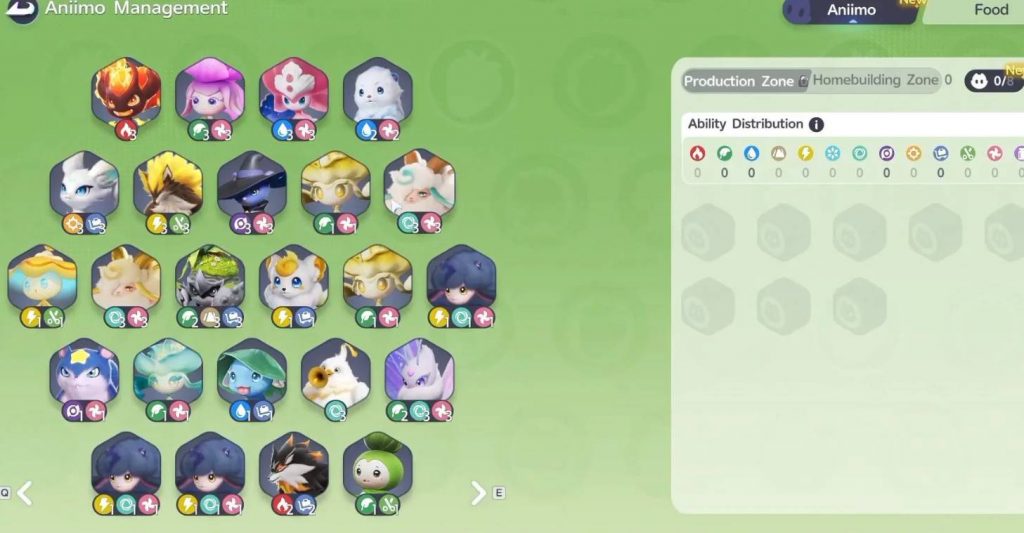
Aniimo has nine elements:
- Fire
- Water
- Grass
- Lightning
- Ice
- Earth
- Wind
- Light
- Dark
Elemental matchups can influence how effective your attacks are, but always check the game’s information when fighting an unfamiliar enemy. Do not rely on a type chart from another creature-collecting game.
Forms are also important. Different forms can have different elements, skills, and other properties. Two Aniimo from the same species family may therefore serve very different purposes. Try to maintain some elemental variety during general exploration. Once you understand the game better, you can begin creating specialized teams around a particular element or encounter.
How to Catch Aniimo More Efficiently
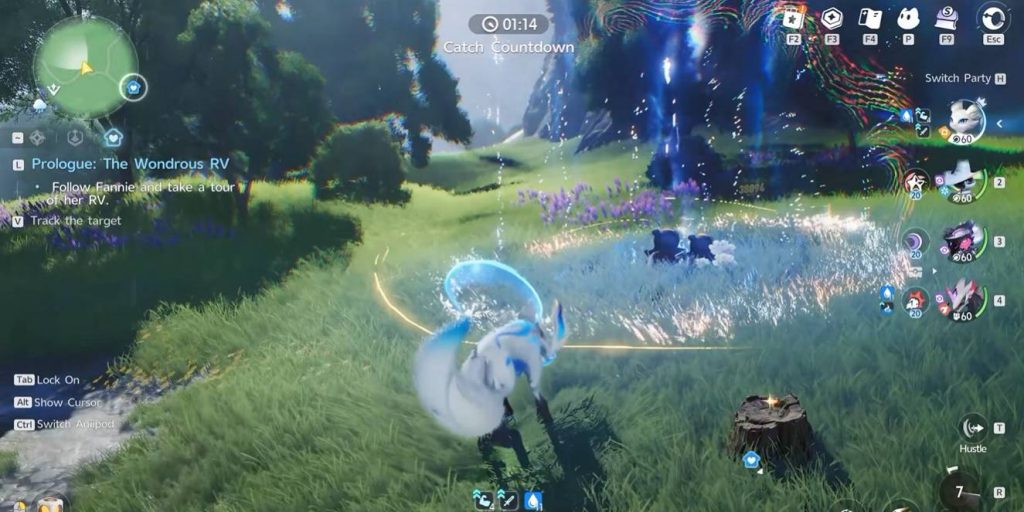
Catching creatures is one of the biggest parts of Aniimo, but simply throwing an Aniipod at everything you see is not always the best strategy. Before attempting a capture, observe the target and surrounding area. A little preparation can make the process much easier.
Use this basic routine:
- Check nearby enemies and environmental hazards.
- Watch whether the target is moving, resting, or sleeping.
- Approach carefully when stealth is useful.
- Use available traps or environmental interactions.
- Apply Break when combat is necessary.
- Select a suitable Aniipod.
- Position yourself at a manageable distance.
- Aim carefully before throwing.
Higher-tier Aniipods can improve your options, while Researcher skills can provide additional capture-related benefits. However, better equipment does not make every throw successful.
Keep standard Aniipods stocked for ordinary encounters and save expensive options for creatures that actually deserve them. Some specialized items also have specific purposes rather than simply being stronger versions of standard pods.
For example, Tumbler can help with group captures, while a Legendary Aniipod is intended for Legendary encounters.
If supplies start running low, check quest rewards, exploration rewards, shops, and your Aniipod Maker at Home. Maintaining a steady supply is much better than spending every valuable pod on random creatures.
Explore Aniimo Habitats
Finding an Aniimo is not always as simple as traveling to the correct location. Habitat conditions can influence which creatures or forms appear.
Pay attention to factors such as:
- Time of day
- Weather
- Local events
- Regional population
- Habitat-specific conditions
- Species research information
If an Aniimo is not appearing where you expected, check these conditions before assuming the creature has been removed or moved somewhere else.
The Aniilog can also provide useful information about species you have already encountered. Use it as a reference when hunting for a specific creature.
Exploration itself should also be productive. Activate Blooms and other travel points, collect Lumin Amber, investigate nearby puzzles, and make note of obstacles you cannot currently overcome.
You do not need to complete every puzzle during your first visit. If you need flying, swimming, tunneling, or another ability, remember the location and return later.
Collect Lumin Amber While Exploring
Lumin Amber is an important resource for regional Branch progression, so it is worth collecting while traveling instead of ignoring it.
When you enter a new area, activate nearby travel points and pick up accessible Lumin Amber along your route. Then check the related Branch to see which progression rewards are available.
This turns normal exploration into useful long-term progress. You also avoid having to make a separate trip later just to collect resources you already passed.
Understand Aniimo Evolution Before Spending Materials
Evolution in Aniimo does not always follow a simple level-based system. Some evolution paths can require specific tasks, encounters, skills, quests, or materials.
Always check the Aniilog before spending rare materials or committing to a particular branch. This is especially important when an evolution can lead to different combat roles.
The Emberpup line is a good example. Flameruff can eventually lead toward different final options, including Scorchhowl and Inferlupa. These are not simply cosmetic changes because their combat purposes can be very different.
Rare individuals deserve even more caution. Check what the evolution changes and whether the process consumes something valuable. Do not assume that every evolution can be reversed.
Also remember that not every transformation is a permanent evolution. Soleon and Fennelun are combat transformations connected to their respective starter paths rather than ordinary permanent evolution stages.
Upgrade a Useful Team Before Chasing Perfect Rolls

It can be tempting to search for the perfect individual every time you catch an Aniimo, but this can slow your progression considerably.
When evaluating a new catch, first ask whether its species and form actually help your team. After that, look at its individual quality, traits, and potential.
A useful Aniimo with imperfect stats can still help you complete quests, defeat enemies, explore new areas, and find better creatures later.
Prioritize the levels and skills your main team actually uses. You can also work on Resonance as your progression allows, but check the requirements when reaching a new training limit.
Capability Awakening also gives you another way to improve your Aniimo. Some training systems provide opportunities to recover resources under certain conditions, while Capafruit effects can be transferred through inheritance.
Do not assume every material or upgrade is refundable, though. Check the relevant menu before spending rare resources.
Items should also be selected according to the creature’s actual role. If your damage feels low, inspect the entire setup before buying another expensive upgrade. Your elemental matchup, skills, energy rotation, and team composition can all affect damage.
Important Aniimo Resources
There are many resources to keep track of in Aniimo, but beginners do not need to memorize everything immediately.
The following resources are worth understanding early:
- Lumin Amber: Used for regional Branch progression.
- Experience Gems: Used to level Aniimo.
- Astranite: Used for Resonance progression.
- Home Coin: Used for Homeland development and its economy.
- Crops, wood, ore, and other materials: Used for crafting and Home production.
- Legendary Tokens: Used in the process of obtaining a personal Legendary Aniipod.
- Capafruit: Used for advanced training and optimization.
- Legendary Star Dust: Used for higher-level progression systems.
- Glimmer: Used for purchases and other shop-related needs.
Spend common resources when they solve an immediate problem. There is little value in saving every Experience Gem if your active team is struggling against content that you should already be able to clear.
Rare materials are different. Before spending them, make sure you understand what they are used for and whether you have a specific upgrade in mind.
Get Your Aniimo Homeland Working Early
Homeland is more than a place to store your collection. It supports production, crafting, farming, food, hatching, and other systems that can make future progression easier. Once Homeland becomes available, start setting up useful production instead of leaving everything inactive.
Pay attention to the Home abilities of your Aniimo when assigning workers. A powerful combat creature is not automatically the best choice for every Homeland job. Useful duplicates can therefore still have value. One Aniimo may be better for fighting while another individual of the same species may be more useful for production.
When something stops being produced, check the actual problem. Look at ingredients, assigned workers, storage, and facility requirements before building something new. Keeping production running while you explore means you can return with new materials already waiting for you.
The most important lesson for new Aniimo players is that you do not need an amazing roster immediately. A team that covers damage, Break, sustain, and utility can take you surprisingly far.
Follow the early Journey objectives, learn Twining, practice dodging and Break, and pay attention to how each creature restores EP. While exploring, collect Lumin Amber and activate useful travel points so future trips become easier.
At the same time, keep your Homeland producing useful materials and maintain a steady supply of Aniipods. When you catch something new, think about what it adds to your collection instead of judging it only by its raw stats.
Once these basics become familiar, Aniimo’s larger systems become much easier to understand. From there, you can start building specialized teams, hunting rare forms, optimizing individual creatures, and exploring the deeper parts of Idyll without wasting resources on things you do not actually need.
Aniimo