


AION 2 Chanter PvE Guide: Best Build, Skills, Macro, and Rotation
Chanter is classified as a support class in AION 2, but that does not mean the class only exists to buff the party. With the right skills, specialties, and rotation, Chanter can deal surprisingly high PvE damage while still providing useful buffs, utility, and healing.
Unlike Cleric, which focuses much more on healing, Chanter supports the party mainly through powerful buffs. The class can increase the party’s damage, movement speed, combat speed, and other useful stats while still contributing solid damage of its own.
This AION 2 Chanter PvE guide covers the class from the early leveling stage to the mid game after reaching level 45. It includes the recommended skills, stigmas, passive abilities, macro setup, and basic rotation.
What Is Chanter’s Role in PvE?
Chanter is best described as a support class with strong personal damage. It has healing abilities, but its healing power is nowhere near a dedicated Cleric.
Instead, Chanter helps the party by making everyone stronger and easier to play. Its buffs can improve damage output, reduce incoming PvE damage, increase movement speed, and provide other useful effects.
The class can also deal good damage while keeping these buffs active. This makes Chanter a strong choice for players who want to support their party without giving up the ability to contribute to the damage.
You should not expect Chanter to compete with a dedicated DPS class in every situation. However, its combination of support and damage makes it extremely useful in PvE groups.
Early Game Chanter PvE Build
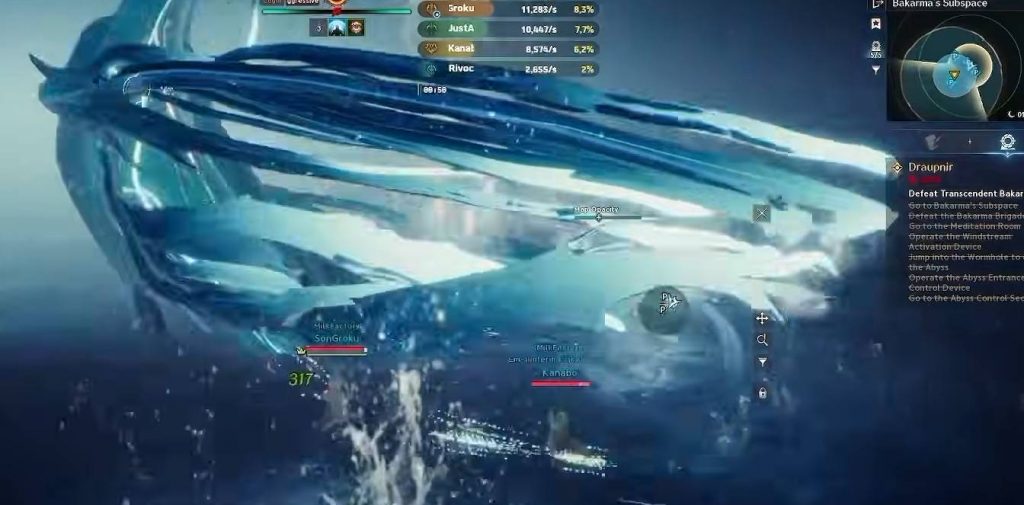
During the early leveling phase, your main damage comes from Onslaught, Incandescent Blow, Dark Crush, and Spinning Strike.
Onslaught and Incandescent Blow form the basic part of your rotation because they can be used repeatedly. Dark Crush and Spinning Strike provide stronger bursts of damage but have cooldowns during the early game.
Understanding how these skills interact is important because several abilities can temporarily unlock Dark Crush.
Onslaught
Onslaught is one of the most frequently used skills in the Chanter rotation. It has no cooldown and generates MP.
For the early game specialty, take the HP absorption option along with the multi-hit effect. The HP absorption provides some extra sustain while leveling, while the additional hits give the skill a small damage increase.
Onslaught becomes even more important later because its higher-level specialty provides an additional chain attack.
Incandescent Blow
Incandescent Blow works together with Onslaught. While Onslaught generates MP, Incandescent Blow consumes it to deal damage.
For PvE, take the specialty that increases damage when hitting fewer targets. This is particularly useful against bosses because you will normally be attacking one target.
The skill becomes your main MP spender while Onslaught keeps your MP available.
Dark Crush
Dark Crush is one of the most important damage skills in the Chanter kit.
The main limitation is that you cannot simply use Dark Crush whenever you want. You first need to activate one of its triggers.
Several different abilities can make Dark Crush available for a short period. Learning these triggers becomes one of the most important parts of playing Chanter effectively.
For its specialties, prioritize critical hit and the additional chain skill. The follow-up attack after Dark Crush deals a significant amount of damage, making it an important upgrade to obtain.
Spinning Strike
Spinning Strike is another heavy-hitting damage skill.
When you use it, you can gain a critical damage boost. Stacking the effect twice gives you a much stronger critical damage increase for a limited duration.
More importantly, Spinning Strike also makes Dark Crush available for a short period. This makes it one of the first major Dark Crush triggers you will have.
For its specialties, use cooldown reduction and the damage increase against fewer targets.
Other Important Chanter Skills
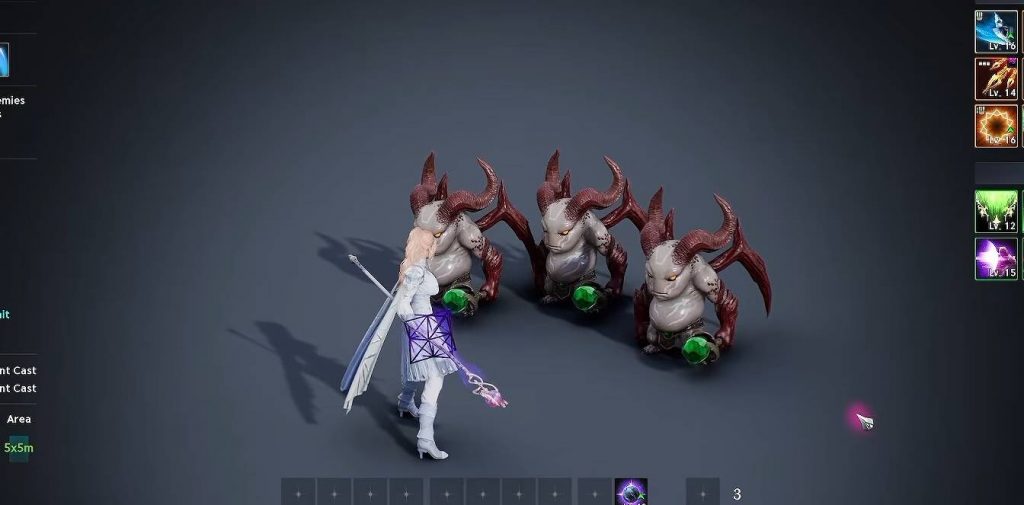
Your four main damage abilities are only part of the build. Chanter also has several utility, mobility, and healing skills that become important during PvE content.
Impactful Crush
Impactful Crush is a ranged skill that can stun an enemy.
The stun itself is not always very important against PvE enemies, but the skill has another major purpose. It can trigger Dark Crush.
This gives you another way to access Dark Crush instead of waiting for Spinning Strike.
During the leveling phase, bring Impactful Crush to level 8 and then switch it to the mobile skill specialty. This makes the ability feel smoother and easier to use.
Gast Rampage
Gast Rampage can only be used against staggered bosses.
Once a boss becomes staggered, you can repeatedly use this skill to deal additional damage. It can be particularly useful while leveling because the damage is fairly strong at this stage.
You do not need to heavily invest in its specialties. An HP absorption effect can be useful if you want additional sustain during boss fights.
Rushing Smash
Rushing Smash is one of your main movement abilities.
The skill lets you jump toward a target, making it useful for quickly moving between enemies.
The most important upgrade comes at level 12. At that point, a specialty can reset the skill’s cooldown whenever you defeat an enemy.
The enemy does not have to be killed by Rushing Smash itself. You can use the skill to move to an enemy, kill that target with another attack, and then use Rushing Smash again on the next target.
This makes the skill extremely useful for leveling and farming.
Trimor Crush
Trimor Crush is another mobility skill, but it requires you to dodge first.
After using your dodge with Shift, you can use Trimor Crush to move toward your target.
For PvE, level it to 8 and take the additional range specialty. The extra range makes it easier to use alongside Rushing Smash.
You will usually rely on Rushing Smash for most of your movement, but Trimor Crush can be useful against bosses or when you need a second movement option.
Recuperation
Recuperation is your main active healing skill.
It provides AoE healing to your party and becomes more useful as you increase its level. At level 8, you can gain an additional consecutive use as well as a healing-over-time effect.
At level 12, take the specialty that increases HP restoration.
Chanter cannot match Cleric’s healing power, but Recuperation is still extremely useful when your party does not have a dedicated healer.
Best Chanter Stigmas for PvE
Stigmas are a major part of the Chanter build because several of them provide powerful effects for the entire party.
During the early game, the main stigmas to focus on are Sprint Mantra, Undefeated Mantra, and Power of the Storm.
Sprint Mantra
Sprint Mantra gives your entire party additional movement speed.
This might not sound like a damage buff, but movement speed is extremely useful in dungeons. Players can move out of boss attacks faster and spend less time standing in dangerous areas.
Sprint Mantra can also give your party a chance to recover HP whenever you attack.
Since Chanter attacks frequently, this effect can provide additional sustain throughout the fight.
The movement speed is also helpful while leveling because it allows you to move between enemies more quickly.
Undefeated Mantra
Undefeated Mantra is one of the strongest party buffs available to Chanter.
It increases PvE damage boost while also improving PvE damage tolerance. This means your party can deal more damage while taking less damage from PvE attacks.
As you progress into harder content, this becomes one of the most important buffs in your kit.
Power of the Storm
Power of the Storm is a powerful temporary buff that you can use on your teammates.
It increases combat speed and reduces cooldowns, allowing the party to perform more actions and maintain stronger damage output.
The main drawback is its long cooldown. Because of this, use it carefully instead of wasting it during unimportant fights.
For bosses, activate Power of the Storm at the start of the encounter so the entire party can benefit from it.
Chanter Passive Skills
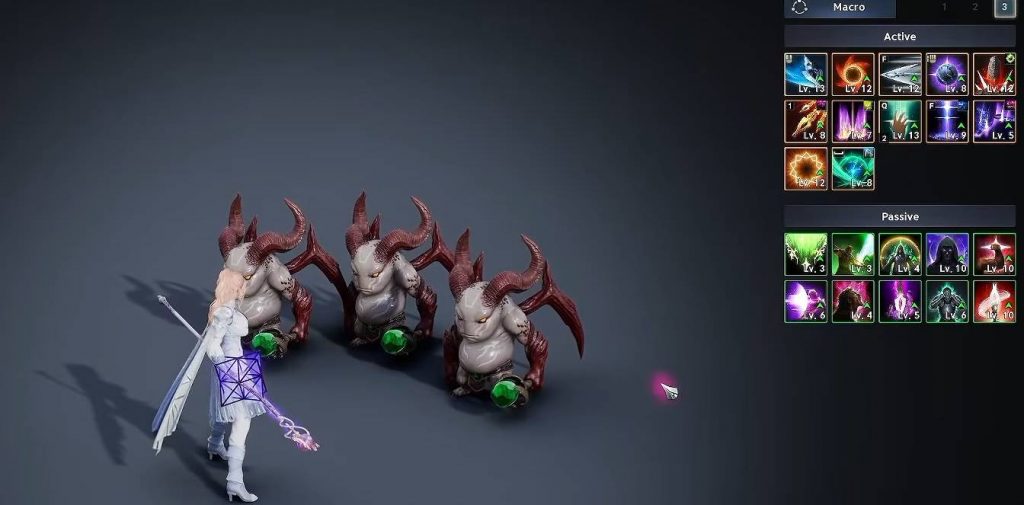
Two passive abilities are particularly important during the early game: Attack Preparation and Wind’s Promise. Attack Preparation increases PvE damage boost, defense, and accuracy. The PvE damage increase makes this passive especially valuable for both leveling and dungeon content.
Wind’s Promise improves critical damage boost and can also provide additional damage when using abilities. These two passives should receive a high priority while building your early-game Chanter.
Once you reach the mid game, Impact Hit becomes another important passive. Impact Hit improves your impact chance, but the more interesting part is its Double Chance effect. Double Chance provides an opportunity to deal significantly increased damage, making it useful for a damage-focused PvE build.
Protection Circle
Protection Circle is another passive worth understanding.
Whenever you hit an enemy, you can gain a Protection Circle stack. Once you reach 10 stacks, the effect provides a shield to your party.
This means your normal attacks can continuously contribute to your party’s defensive support during a boss fight.
It is not necessarily the first passive you should max, but it is important to understand that attacking the boss can provide additional protection for the entire group.
Early Game Chanter Macro
A simple macro can make the leveling process much easier.
The main idea is to prioritize Dark Crush first. However, Dark Crush cannot be used until another ability triggers it.
When Dark Crush is unavailable, the macro will move to Spinning Strike.
After Spinning Strike is used, Dark Crush becomes available for a short period. The macro can then return to Dark Crush and use it.
Once both abilities are on cooldown, the macro can fall back to Incandescent Blow.
From there, you can continue using your basic attacks and Incandescent Blow while waiting for the stronger skills to return.
This setup is enough to get through most of the early leveling content without requiring a complicated rotation.
Players who want to squeeze out more damage can manually use Impactful Crush whenever Dark Crush becomes available again. This provides another trigger instead of waiting for Spinning Strike.
Reaching Level 45: Transition to Mid Game
Once you reach level 45, skill levels and specialties become much more important. Instead of simply leveling every skill evenly, you should start targeting specific skill breakpoints that unlock stronger effects. One of the biggest priorities is Dark Crush level 16.
Dark Crush Level 16
Dark Crush receives a major upgrade at level 16 that allows you to remove its normal cooldown under the right conditions.
This changes the entire way Chanter plays.
Earlier in the game, Dark Crush has a cooldown that limits how often you can use it. Once this specialty becomes available, you can take advantage of the different Dark Crush triggers to use the skill repeatedly.
Spinning Strike, Merchant’s Wrath, and Impactful Crush can all help activate Dark Crush.
Because of this, reaching Dark Crush level 16 should be one of your biggest goals when building a mid-game Chanter.
Onslaught Level 16
Onslaught is another major level 16 target.
At this level, Onslaught gains an additional chain attack. The extra attack deals considerably more damage than the earlier hits.
Since Onslaught is used constantly, the additional chain provides a noticeable increase to your overall damage.
You can also take the specialty that reduces Spinning Strike’s cooldown when Onslaught hits.
This is useful because Spinning Strike is one of the main triggers for Dark Crush.
Spinning Strike Level 16
Spinning Strike also gains an important specialty at level 16.
The upgrade allows the attack to ignore block and evasion while guaranteeing a critical hit.
This makes the skill more reliable against bosses and helps maintain consistent damage.
The earlier cooldown reduction specialty is useful, but the level 16 effect can become the better option once you reach the required skill level.
Recuperation Level 16
Recuperation can also be upgraded to level 16.
One specialty reduces its cooldown, allowing you to heal your party more often.
However, you need to consider the other available healing effects when choosing your specialty.
If you already have a Cleric in the party, you generally do not need to heavily prioritize additional healing. If Chanter is the main source of support, however, stronger healing can become more valuable.
Merchant’s Wrath
Merchant’s Wrath becomes an important stigma once you reach the mid game. It deals ranged damage and, more importantly, makes Dark Crush available for several seconds. This gives you another Dark Crush trigger and becomes especially powerful once you unlock the level 16 Dark Crush specialty. Merchant’s Wrath should therefore be included in your macro alongside the other Dark Crush triggers.
Stigma Leveling Priority
After setting up the main stigma skills, Power of the Storm should be leveled to 5. This reduces its cooldown by a noticeable amount, allowing you to use the party buff more often. After that, focus heavily on Undefeated Mantra.
Higher levels improve the PvE damage boost and PvE damage tolerance provided to the entire party. Additional effects can also improve the party’s overall damage output. Once Undefeated Mantra reaches level 20, you can start investing into your other stigma abilities based on your preferred content and party composition.
Fracturing Blow for Organized Parties
Fracturing Blow can be a strong alternative when playing with a coordinated party. The skill reduces the enemy’s defense, allowing everyone in the group to deal more damage. Defense reduction can be especially valuable during the earlier stages of progression because flat defense reduction has a bigger impact when enemy defenses are relatively low.
For organized groups, Fracturing Blow can therefore be a good option, particularly during early and mid-game PvE content. However, always consider what buffs and debuffs the rest of your party is already using before changing your setup.
Should Chanter Use Healing Touch?
A common question is whether Chanter should use Healing Touch when there is no Cleric in the party. Healing Touch can provide additional healing, but it is not necessarily a must-have skill.
Its long cooldown and relatively limited healing output can make it less attractive compared to another offensive or support option.
For this reason, a damage-focused Chanter can continue using Merchant’s Wrath, Undefeated Mantra, Sprint Mantra, and Power of the Storm even when there is no Cleric.
Of course, the best choice depends on the dungeon and your party. If your group is struggling to survive, additional healing can be useful. If survival is already comfortable, more damage and stronger buffs will usually provide greater value.
Mid Game Chanter Macro
The mid-game macro becomes more important because you now have several different abilities that can trigger Dark Crush. The main Dark Crush skill line should prioritize:
- Dark Crush
- Spinning Strike
- Merchant’s Wrath
- Impactful Crush
All four should be placed on the same macro skill line.
The macro will first attempt to use Dark Crush. If it is unavailable, it moves to Spinning Strike.
Once Spinning Strike activates Dark Crush, the macro returns to Dark Crush and uses it.
When Spinning Strike is on cooldown, the macro moves to Merchant’s Wrath. That skill activates Dark Crush again, allowing the macro to return to Dark Crush.
After Merchant’s Wrath is unavailable, Impactful Crush becomes the next trigger.
When every trigger is on cooldown, the macro falls back to Onslaught and Incandescent Blow.
This setup allows most of your damage rotation to happen automatically while still giving you room to manually use important utility skills.
Chanter PvE Rotation
The basic Chanter rotation is relatively simple once the macro is set up correctly.
Before starting a boss fight, activate Power of the Storm to buff the party.
After that, use Rushing Smash to quickly reach the boss.
Once you are in position, activate your damage macro.
From this point, the macro handles most of your damage rotation by prioritizing Dark Crush and its different triggers.
Your main responsibility is to watch the party and react when someone needs healing.
If a teammate loses a significant amount of HP, use Recuperation to restore the party’s health.
You can also manually use Impactful Crush when Dark Crush becomes available and your other triggers are still on cooldown. This is mainly for players who want to maximize their personal damage.
Tips for Playing Chanter in Dungeons
One of the biggest mistakes new Chanter players can make is spending too much time trying to heal.
Chanter is a support class, but its support comes from more than healing. Your buffs, movement speed, damage, shields, and personal damage all contribute to the party.
Keep attacking the boss whenever it is safe to do so. Your attacks can help trigger Protection Circle and provide additional healing effects through Sprint Mantra.
Movement is also important. Sprint Mantra makes the entire party faster, but players still need to avoid boss attacks properly.
If your party has a Cleric, pay attention to overlapping buffs. Some Chanter and Cleric effects may not stack, so understanding your party composition can help you choose better stigma options.
If you are the only support, use Recuperation carefully. Chanter does not have enough healing to simply out-heal every mechanic, so avoiding unnecessary damage remains the best way to keep the party alive.
Chanter is much more than a simple support class in AION 2. While it cannot replace a dedicated Cleric in terms of healing, it brings powerful party buffs, useful utility, strong mobility, and surprisingly high PvE damage.
During the early game, focus on Onslaught, Incandescent Blow, Spinning Strike, and Dark Crush. Rushing Smash is also extremely useful for faster leveling, while Recuperation gives you the healing needed to support your party.
After reaching level 45, start focusing on important skill breakpoints. Dark Crush level 16 is one of the biggest upgrades because it allows you to make much better use of its different triggers. Onslaught and Spinning Strike also become stronger at their higher levels.
For stigmas, Sprint Mantra, Undefeated Mantra, Power of the Storm, and Merchant’s Wrath form a strong PvE setup. Fracturing Blow can be considered for coordinated groups, while additional healing options are mostly situational.
The key to playing Chanter well is finding the right balance between damage and support. Keep your buffs active, continue attacking whenever possible, use Recuperation when your party needs it, and let your macro handle most of the core damage rotation. With the right setup, Chanter can be one of the most useful PvE support classes in AION 2 while still putting out respectable damage.
AION 2