


Ductworks Guide: How to Play, Complete Projects, and Earn Money in Roblox!
Ductworks is a Roblox game where players build duct systems to distribute air throughout different rooms. Your job is to connect pipes, place air outlets, and improve air coverage in areas such as bedrooms, bathrooms, and living rooms. As you complete projects and supply more air, you earn money that can be used to purchase upgrades and unlock better projects.
The game can feel confusing at first because you need to manage your pipe placement, air pressure, and available metal. However, once you understand how the system works, you can build more efficient layouts and earn money over time. Here is a beginner’s guide to playing Ductworks, completing projects, and improving your air distribution.
How to Play Ductworks
When you start a project, you will see a building divided into several rooms. Each room has an air coverage percentage that shows how much of the area is receiving air. Your goal is to connect the air handler to different rooms using pipes and suitable air outlets.
You can select pipes and other components from the menu at the bottom of the screen. Place straight pipes to create routes, use angled pieces to change direction, and add intersections when you need to split the airflow toward multiple rooms.
As air begins reaching the rooms, their coverage increases. You will also start earning money from the system. Once you understand how to connect the components, you can experiment with different layouts to improve coverage without using too much metal.
How to Connect Pipes and Fill Rooms With Air
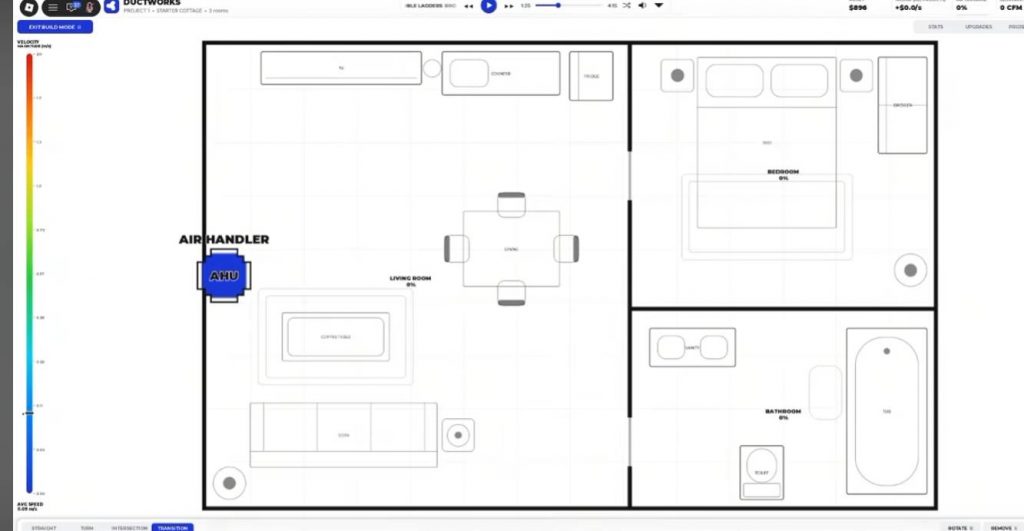
The first step in any project is to plan where your pipes should go. Rather than placing components randomly, look at the room layout and decide how to distribute air to each area.
Start by connecting a pipe to the air handler. Extend the pipe toward the rooms that need coverage, using straight sections whenever possible. Add angled pipes when the route needs to turn, then use intersections to send air in different directions.
After connecting the main route, place an appropriate diffuser or air register in each room. These components release air into the surrounding area, allowing the room’s coverage percentage to increase.
If one room receives very little air, check whether your pipe route is too long or whether the air handler needs an upgrade. You may also need to add another branch or adjust the position of your outlets.
Understand Pipe Efficiency and Airflow
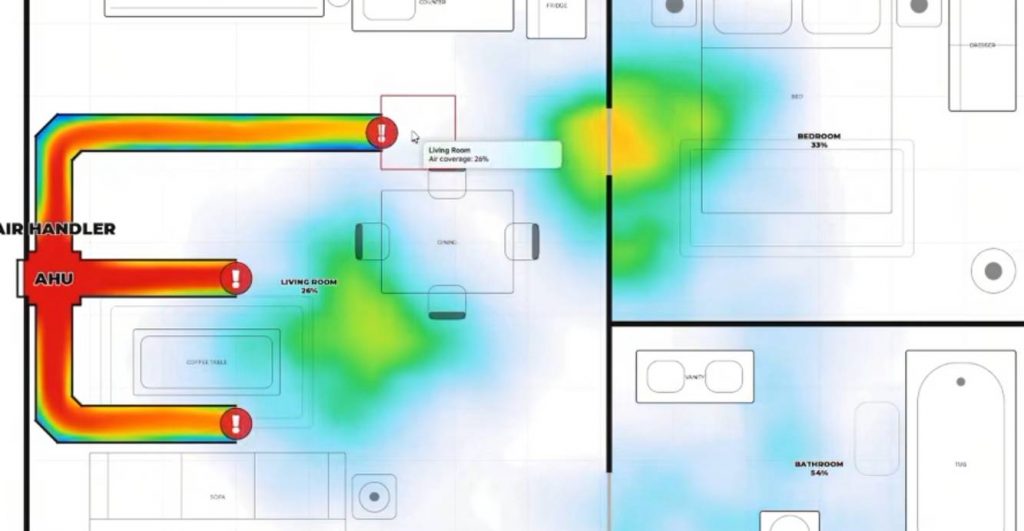
Pipe efficiency is an important part of building a good duct system. As pipes extend farther from the air handler, the airflow can become weaker. The game may show this change through the pipe’s color, with blue sections indicating weaker airflow in the example shown in the source guide.
This means a long, complicated pipe network may not distribute air as effectively as a shorter and better-planned layout. Try to avoid unnecessary turns and use intersections to direct air toward several rooms.
If the airflow becomes too weak before reaching a room, consider upgrading your air handler or changing the pipe arrangement. You can also test different positions for your diffusers to find a setup that increases coverage more efficiently.
Best Tips for Increasing Air Coverage
Filling a room completely can take time, especially when you are working with a limited amount of metal. These tips can help you improve your layout and avoid wasting resources.
- Use straight pipes for long sections whenever possible.
- Add intersections when you need to distribute air toward multiple rooms.
- Place diffusers in open areas so furniture does not block their coverage.
- Avoid placing air outlets directly beside wardrobes, desks, and other large objects.
- Check the coverage percentage of each room before adding more pipes.
- Upgrade the air handler if the airflow is too weak to reach distant areas.
- Experiment with different pipe arrangements instead of keeping an inefficient layout.
Furniture placement matters because a diffuser may not spread air effectively when it is too close to an obstacle. Moving the outlet to a more open position can improve the room’s coverage without requiring a complete redesign.
How to Use Intersections, Boosters, and End Caps
Several duct components can help you manage airflow more effectively.
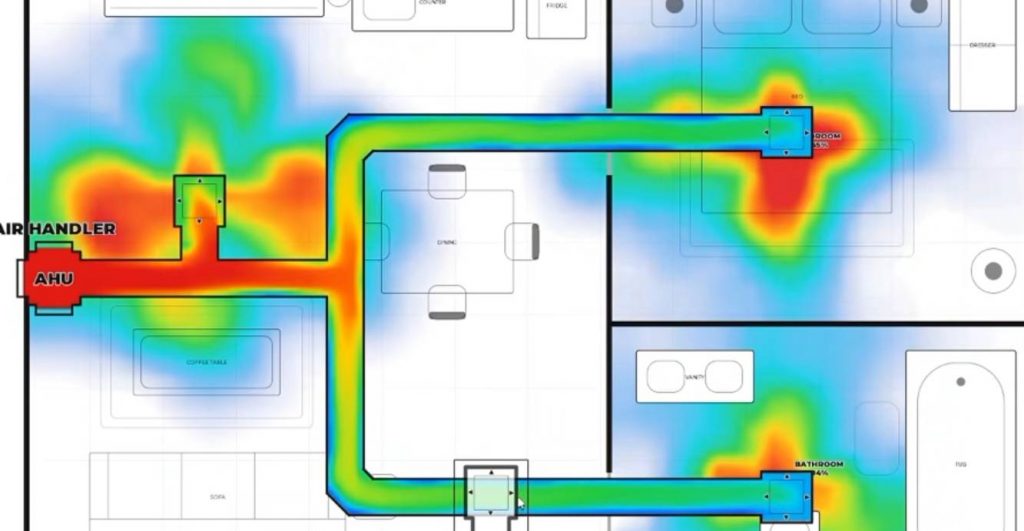
Intersections allow one pipe route to branch into multiple directions. They are useful when you want to supply air to a bedroom and living room from the same main line rather than creating completely separate routes.
Air register boosters can help improve the airflow delivered to a particular area. If a room’s coverage is increasing too slowly, you can test a booster near the relevant outlet and check whether the results improve.
End caps are another component worth experimenting with. The source guide reports that closing an unused pipe end helped redirect more air toward other rooms in its test layout. The exact result may depend on the pipe arrangement, so check your air coverage after making the change.
The best approach is to make small adjustments and observe how each component affects your system. This helps you understand which changes are useful for your current project.
How to Upgrade Your Air Handler and Other Equipment
You can spend the money earned from air coverage on upgrades that improve your system. One important upgrade is the blower motor, which increases the power available for moving air through your duct network.
If distant rooms are struggling to receive enough air, upgrading the blower motor may help. You can also look for upgrades related to duct lining and metal sourcing, which can improve your building options and make it easier to construct more extensive systems.
Another useful upgrade increases your metal limit. Each project has a limit on how much metal you can use to build your ducts. If you run out of metal before reaching your desired coverage, check the upgrade menu for an option that increases this limit.
Prioritize upgrades based on your current problem. For example, improve airflow when the system is too weak, or increase your metal limit when you cannot place enough pipes and components.
How to Earn Money in Ductworks
Money is essential for progressing through Ductworks because it allows you to purchase upgrades and unlock more valuable projects. One of the main ways to earn it is by supplying air to rooms.
As your system begins covering more of a building, you can earn money from the airflow being delivered. This income can continue accumulating over time, allowing you to make progress even while you are not actively changing the layout.
To improve your earnings, focus on increasing coverage across multiple rooms instead of investing everything in a single area. A basic pipe network can be enough to get started, but you should gradually improve it as you earn more money.
You can also build a simple, functional duct layout and let it generate income while you wait. However, check that the system is working properly before leaving it unattended, as poor airflow can limit your earnings.
How to Complete Projects Faster
Ductworks offers different projects, and completing them helps you progress through the game. Once you have enough money, you can purchase a more expensive project that may offer greater earning potential.
Before starting a new project, make sure you understand the basic components and have enough resources to build a working duct system. Begin by connecting the main pipe route, then add branches to cover the remaining rooms.
You do not need to reach 100% coverage immediately to start learning how the system works. In the source guide, a test project reached around 60–66% coverage while still generating money. This shows that partial coverage can be a useful starting point while you save for better upgrades.
As your income increases, improve the layout and work toward higher coverage. A more valuable project can then help you earn money faster and unlock further upgrades.
Common Mistakes to Avoid
New players can waste resources by placing too many pipes without checking whether the layout actually improves airflow. Before adding another component, inspect the coverage percentage and identify which room needs attention.
Another common mistake is placing diffusers near furniture. Even if the pipe network is connected correctly, an outlet positioned beside a wardrobe or desk may not spread air effectively.
You should also avoid using all your available metal on one room. Keep track of your metal limit and leave enough resources to connect the other areas. If you repeatedly run out of metal, consider upgrading the limit before starting a more complicated project.
Finally, do not ignore your upgrades. A stronger blower motor and a higher metal limit can make later projects easier to complete.
Ductworks is all about building an effective pipe network that supplies air to every room while managing your money and available metal. Start with a simple layout, connect pipes to the air handler, and use intersections and diffusers to distribute air throughout the building.
As you earn money, improve your blower motor, increase your metal limit, and experiment with different pipe arrangements. Remember to keep diffusers away from large furniture and check each room’s coverage regularly. With a more efficient layout and the right upgrades, you can complete projects more easily and earn money to unlock better opportunities in Ductworks.
Ductworks